Methodology

Methodology

Regulated medical waste has to be treated. The question is where.

Every hospital, laboratory and medical office building generates waste that cannot go in a dumpster. It has to be rendered non-infectious before it can be disposed of as ordinary solid waste — and that step has to be documented.

What differs between methods is not whether the waste gets treated, but where it happens, who carries the risk in between, and what it costs over twenty years. This page walks through the options, then through how San-I-Pak’s on-site systems work.

The options

Four ways that waste gets treated.

Three of them move the waste off your property before it is made safe. One does not.

What San-I-Pak builds

On-site steam sterilization

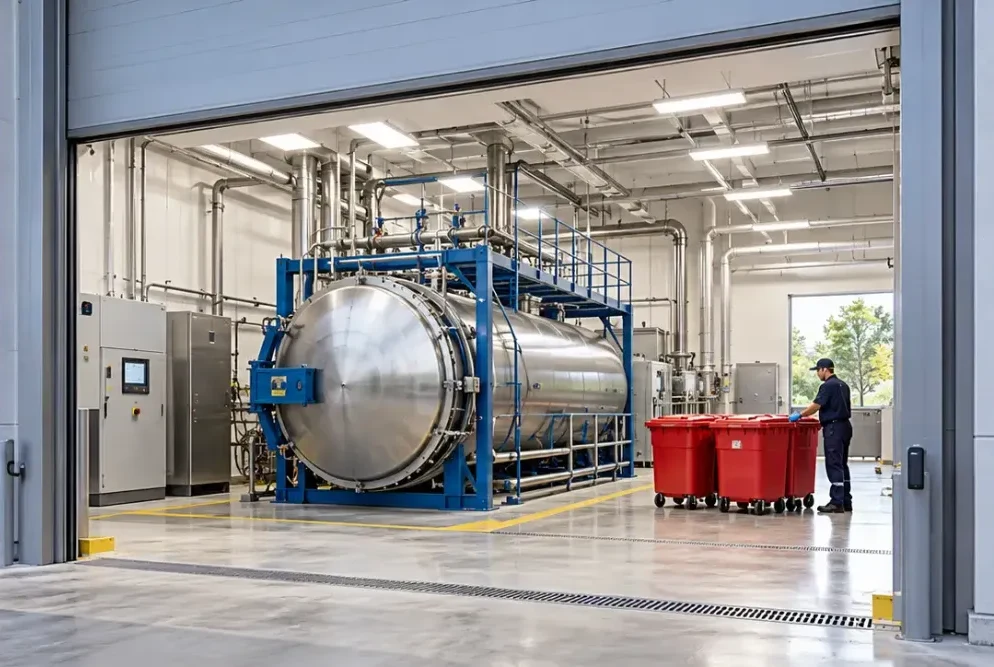
An autoclave in your own building. Sealed carts move waste from the point of generation straight into the chamber, where saturated steam under pressure holds it at temperature long enough to render it non-infectious. It then leaves as ordinary solid waste.

Where it happens
Inside your facility, under your control
Transport of untreated waste
None — nothing infectious leaves the property
Volume
San-I-Pak reports reducing the regulated waste footprint from 15% to 1%
Cost profile
Capital up front, then stable operating cost for the life of the equipment
Records
Cycle data captured automatically by San-I-Pak Net
The common current state

Off-site treatment (hauled)

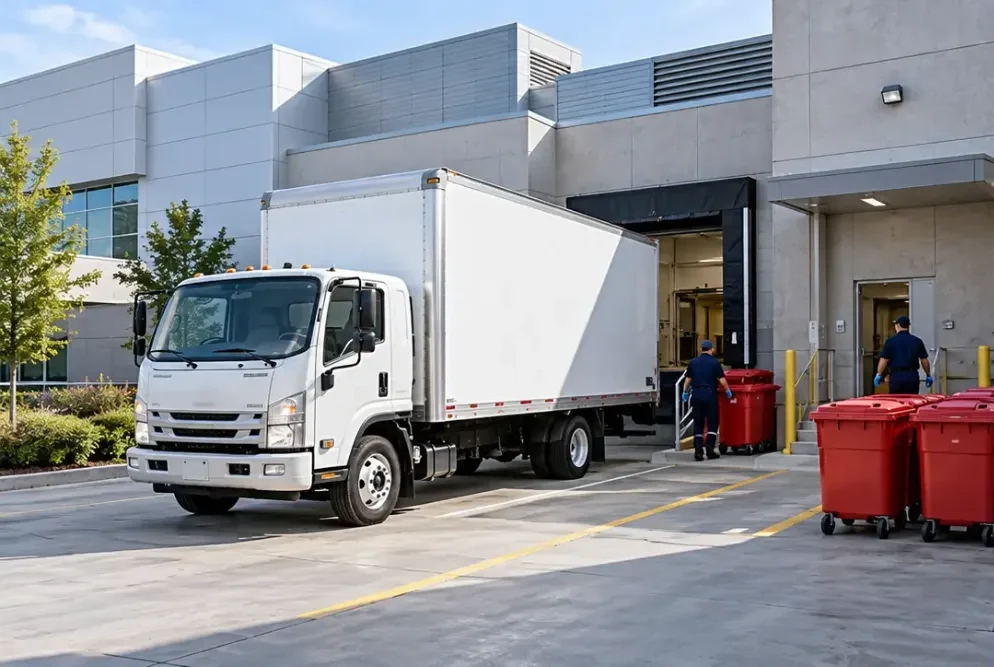
Waste is stored on site, collected by a licensed hauler and trucked to a central facility — usually a large autoclave — where it is treated in bulk alongside waste from other generators.

Where it happens
A third-party plant, often many miles away
Transport of untreated waste
Every pickup, on public roads
Volume
Unchanged at your facility; you store and pay for all of it
Cost profile
Recurring per-pound or per-container fees, re-priced at each contract renewal
Records
Manifests from the hauler; treatment evidence sits with the vendor
The traditional method

Incineration

Waste is burned at high temperature, off site. Still required in some jurisdictions for specific streams such as pathological waste and trace chemotherapy.

Where it happens
A permitted incinerator, off site
Transport of untreated waste
Every pickup, on public roads
Volume
Greatly reduced, but combustion produces ash and air emissions
Cost profile
Recurring fees, plus exposure to tightening emissions regulation
Records
Manifests and the operator’s emissions compliance record
Alternative technologies

Chemical & microwave treatment

Waste is shredded and then disinfected chemically, or heated by microwave energy. Deployed both on site and off site, usually at smaller scale and for a narrower set of streams.

Where it happens
Either, depending on the system
Transport of untreated waste
Depends on where the unit sits
Volume
Reduced by shredding; residue still requires disposal
Cost profile
Varies widely with consumables and maintenance
Records
Varies by system
How it works

One cycle, start to finish.

Steam sterilization is not a new idea — it is the same principle hospitals already trust for surgical instruments, applied to the waste stream at scale.

01

Load

Sealed carts move waste from the point of generation to the chamber. Staff never handle loose waste.

02

Seal

The door interlocks. The chamber cannot open while a cycle is running.

03

Sterilize

Saturated steam under pressure holds the load at temperature for a validated time — the “total-kill” cycle.

04

Reduce

Treated waste is compacted, cutting the volume that leaves the building and the space it occupies on the way out.

05

Discharge

What leaves is ordinary solid waste. No viable pathogen has left the property at any point.

Validated, not assumed

Biological indicators confirm the cycle actually achieved kill, and the result is recorded against that cycle.

Monitored remotely

San-I-Pak Net tracks cycles, waste generation and utility usage, and stores the regulatory data.

Built to outlast the contract

San-I-Pak reports a 20+ year equipment lifespan, with installations on record since 1992.

What changes

Moving the treatment step inside the building.

methodology-offsite icon
Off site — the waste leaves untreated
methodology-onsite icon
On site — nothing infectious leaves

The challenge

Off-site disposal means high costs, more transportation and a bigger environmental footprint.

old-1-costs icon
High disposal costs

Per-pound fees that reset at every contract renewal.

old-2-transport icon
Frequent transportation & logistics

Untreated waste on public roads at every pickup.

old-3-emissions icon
More carbon emissions

Fuel burned hauling waste that could have been treated on site.

old-4-regulatory icon
Ongoing regulatory complexity

Manifests, vendor audits and treatment evidence held by someone else.

The results

Treating waste where it is generated changes the cost base, the risk profile and the paperwork.

new-1-savings icon
Significant cost savings

Lower hauling, disposal and handling fees — San-I-Pak reports reductions of up to 70%.

new-2-footprint icon
Reduced carbon footprint

Fewer trucks, less fuel, lower emissions.

new-3-compliant icon
Safer, cleaner, more compliant

You control the process and hold the treatment record yourself.

new-4-planet icon
A healthier planet

Less waste in landfills, more sustainable operations.

Waste footprint
15% → 1%

Reduction in regulated medical waste, as reported by San-I-Pak

Operating cost
Up to 70%

Reduction in hauling, labor and overall waste operating expense

Equipment life
20+ yrs

Cost stabilization over the life of the system

Untreated waste leaving site
None

Nothing infectious leaves the property at any point

Find out what this would look like in your building.

We will size a system against your actual waste volumes, show you the footprint it needs, and walk through the regulatory path in your state.